

The revenue-sharing cap that was meant to create a level playing field hasn't even been in place for a year, and power schools like Notre Dame are already complaining about the limit being too low.
The cap, which limits every school to doling out $20.5 million of rev share to its athletes a year, was thought to be a tool that would tamp down some of the NIL and Transfer Portal craziness. It was also a way for schools to keep players on teams for more than one year. It's done neither of those things.
Notre Dame and other schools have worked around the salary cap using NIL dollars. Spending is bigger than ever. It's still more surprising when a big-name player announces he's returning to a program than when he announces he's leaving. Now the Fighting Irish are among the schools that think the cap needs a tweak.
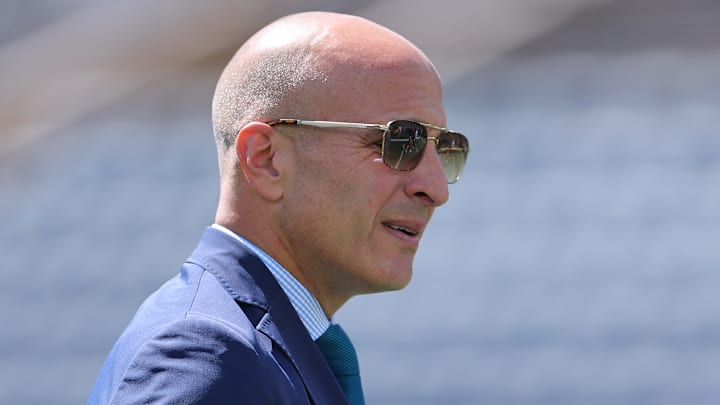
Notre Dame AD Pete Bevacqua supports raising the college football rev-share cap
"The idea of capping compensation has never worked in this industry," Miami athletic director Dan Radakovich told Yahoo! Sports on Friday. "The model we have right now is really difficult to enforce. People who feel like they want to invest should have the ability to invest."
In the same report, Dan Wetzel quotes Notre Dame AD Pete Bevacqua as being in favor of raising the cap. While other ADs think it should just go away forever.
The fundamental idea of the rev share cap was supposed to make sure that schools with fewer resources could compete with the big boys. However, there are still several tiers, both because not every school can afford to spend $20.5 million per year on rev share and because NIL makes up the difference for schools like Notre Dame.
That's why Radakovich thinks the cap should just be done away with. Allow the programs that can spend to spend.
"We’ve never been successful to a large extent at legislating competitive equity."
If nothing else, this era of college sports seems to be all about instantly changing things in an attempt to "fix" them, rather than giving an issue a few years to really demonstrate the effect.
College football talks every year about "next year's" Playoff format. Usually, before "this year's" CFP has seen its first snaps. Still, the degree of difficulty in changing the rev share cap is that it's part of a court-ordered settlement. These rules weren't put in place by a vote of college presidents or conference commissioners.
However, if Notre Dame and the big schools want to change things, history says they'll find a workaround, possible unintended consequences be damned.
 Add us as a preferred source on Google